ServicesWhole-Home Filtration
Whole-Home Filtration in Maricopa
A chlorine smell in the shower or a flat, off taste at the kitchen sink usually starts with the water coming into your home. A whole-home filter treats it at the main line, so every tap benefits. We inspect your plumbing first and share what we see before recommending anything.
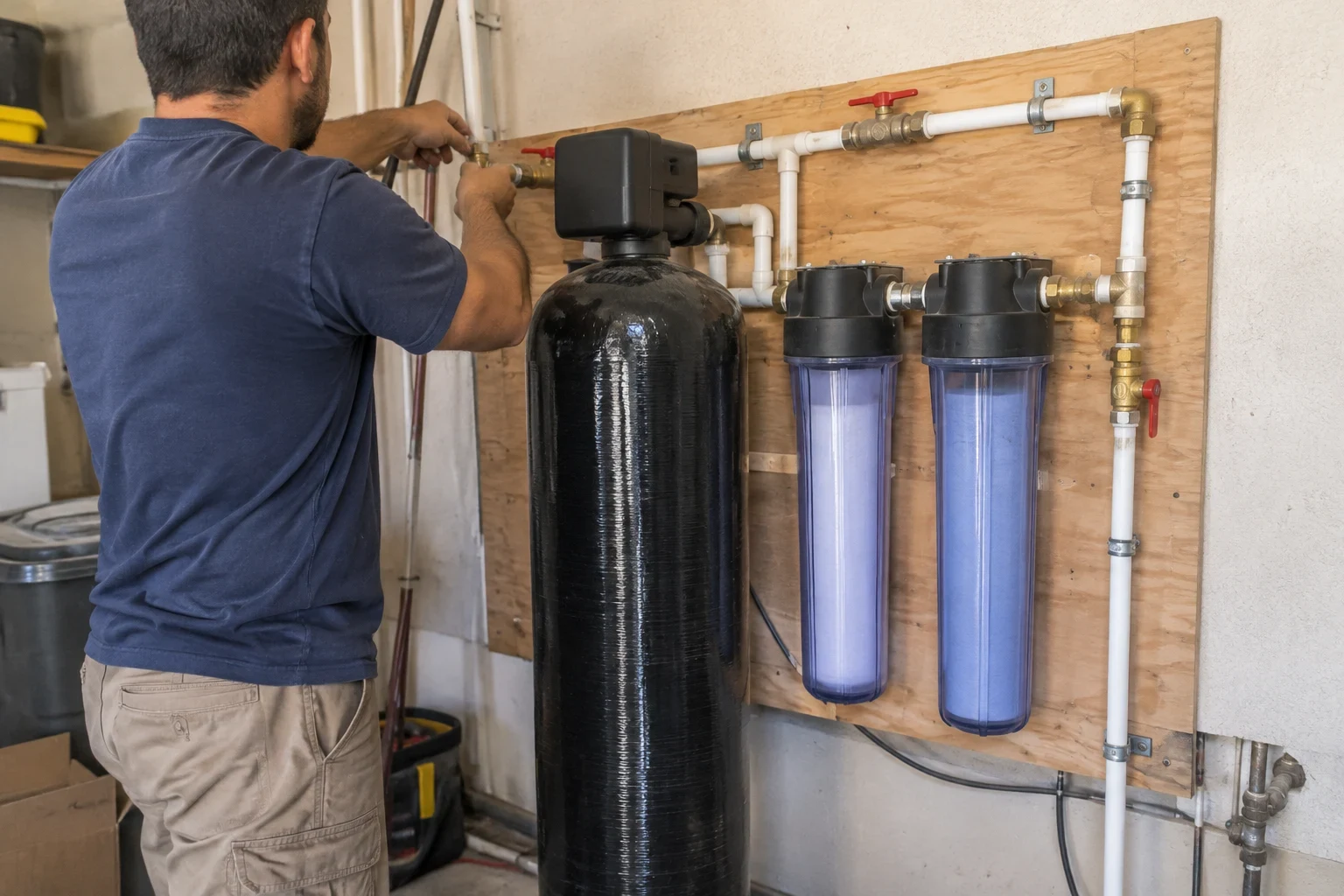
What whole-home filtration does for your home
Whole-home filtration means a filter tank or cartridge housing placed on your main water line, most often in the garage near the water heater or beside an existing soft water loop. Incoming water flows through activated carbon, which captures chlorine along with many compounds that cause odd tastes and smells. By the time it reaches your faucets, showers and appliances, it has already been treated, and most people notice the change at the shower first.
This system makes sense when your main concern is smell, taste or how the water feels on your skin. It is a different tool from a softener. Carbon leaves the hardness minerals in place, and those minerals are what build white crust on faucets and glass shower doors, a common sight across the Phoenix area. For scale, see our water softener installation page; many homes pair the two.
Each job begins with an inspection. We note where your main line enters, what equipment is already there, how much space you have and what you notice in daily use. After that, you get a plain answer on whether a whole-home filter will make a real difference and what size suits your home.
What the work includes
We look before we recommend
We check your main line, any softener or filter already installed, your fixtures and the spot where new equipment would sit. You hear what we found in everyday words, including the things we think can stay as they are.
Sized for your busiest hour
The right filter depends on how many bathrooms you have and how often several showers and faucets are on at once. An undersized unit lets pressure dip when two showers run together, so we size for your peak use.
A sediment stage when we see a need
Grit in faucet screens or debris in old cartridges tells us there is sediment in the line. When we see that, we add a sediment filter ahead of the carbon so the carbon bed lasts longer.
Tidy installation with a bypass
Every system includes a bypass valve, so your home still has running water while the filter is serviced. We protect the floor, haul away packaging and leave your garage clean.
A short walkthrough at the end
We show you where the bypass is, how servicing works and when the model you picked will need fresh media or cartridges.
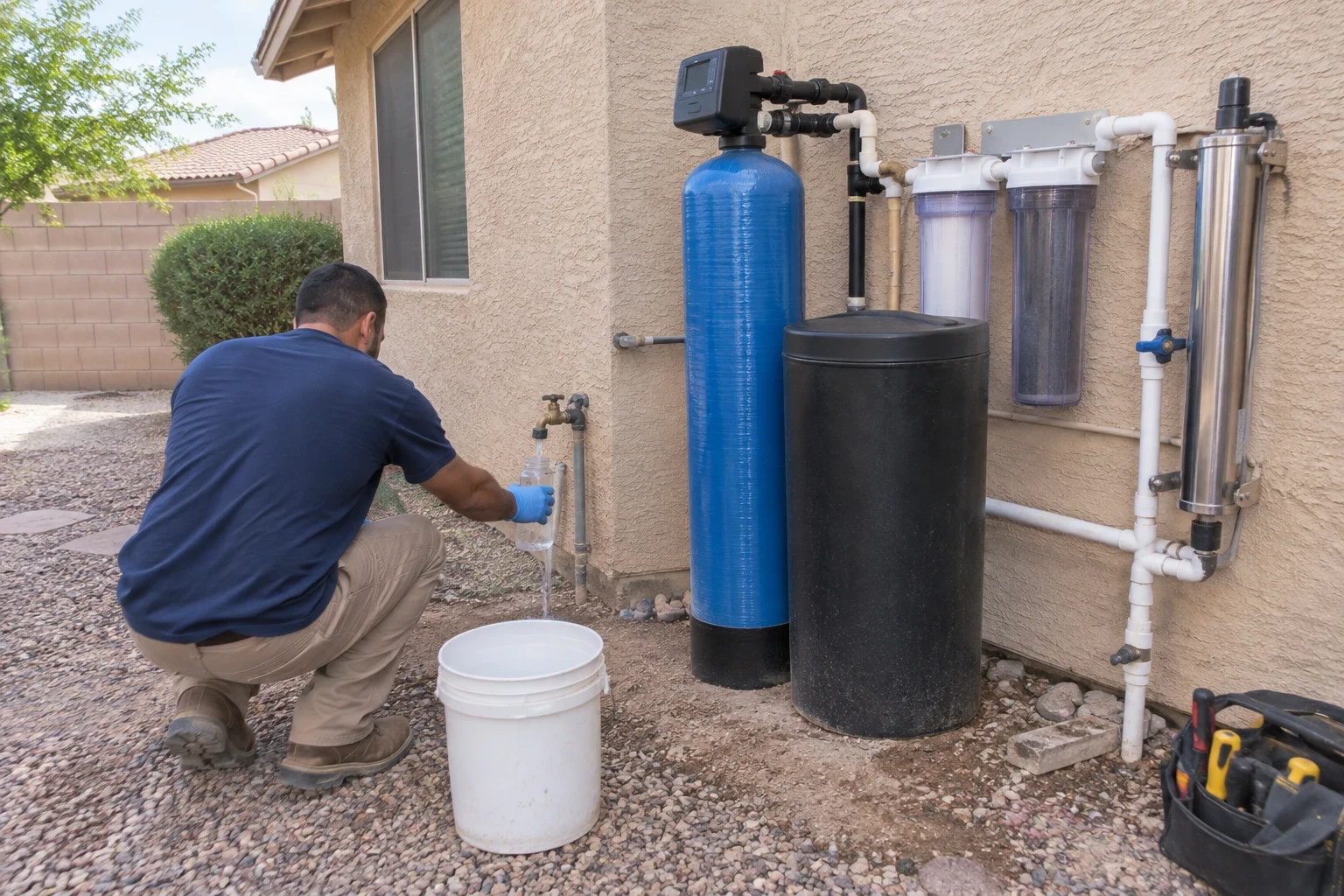
Signs a whole-home filter could help
- Your shower smells like chlorine
- Hot water releases chlorine into the air, so a bathroom that smells like a pool is one of the most common reasons people call us.
- You only drink bottled water
- If nobody in the house likes the taste from the tap, filtering at the main line improves it everywhere, including the ice maker and the fridge dispenser.
- Grit shows up in aerators
- Small particles in faucet screens or a toilet tank point to sediment in the line. A prefilter stage catches it before it reaches fixtures.
- Small filters keep running out
- Pitcher and faucet filters work, but swapping them every few weeks adds up. One system on the main line covers the whole house.
- You have a softener but the water still tastes off
- A softener handles minerals, not chlorine taste. Adding carbon ahead of it treats taste and odor and can also help protect the softener resin.
How a job runs, start to finish
- 1
Your phone call
Tell us what you notice about your water, such as a smell, a taste or grit, and a little about the house. Then we pick a time to come by.
- 2
The inspection
We look over your plumbing, current equipment and the place a filter could be mounted. You hear what we found and whether whole-home filtration is a good match, or if a different option would suit you better.
- 3
A plain recommendation and price
When a filter makes sense, we go over the size, any prefilter or plumbing changes, and the cost before anything is installed. There is no pressure to decide on the spot.
- 4
Installation day
Your water is off for part of the visit while we tie the system into the main line. Once it is connected, we rinse the new carbon, check every joint for drips and clean up before we leave.
What shapes your quote
There is no single price for whole-home filtration, because houses and water complaints vary. We give you a number after the inspection, so it reflects the actual job. These are the factors that move it most.
- How big the system needs to be
- A house with several bathrooms and a full household calls for a larger carbon tank or a higher-flow housing. That extra capacity keeps pressure steady when water runs in more than one room.
- Which carbon you need
- Standard activated carbon handles chlorine well. Catalytic carbon costs more, and we only recommend it when the taste or odor goes beyond chlorine.
- How easy the plumbing is to reach
- An existing soft water loop in the garage keeps the work straightforward. Rerouting pipe, moving equipment or working in a tight corner adds time.
- Extra stages or equipment
- A sediment prefilter, or a new softener installed during the same visit, adds to the scope and the cost.
Whole-home filtration questions
- Will a whole-home filter soften my water?
- No. Carbon removes chlorine and many of the compounds behind bad taste and odor, but calcium and magnesium, the minerals that leave hard water scale, flow straight through. White crust on fixtures is handled by water softener installation. Many homes run both a filter and a softener.
- Will it lower my water pressure?
- With a properly sized system, most people never notice a change in daily use. When pressure does drop, the usual cause is a filter too small for the house. We prevent that by sizing to your bathroom count and your peak water use.
- How often does the filter need service?
- It depends on the system type and how much water your household uses. Some carbon tanks run several years before the media is replaced, while cartridge systems need new cartridges more often. We walk you through the schedule for the specific model before you decide.
- Do I still need a reverse osmosis system?
- For many people, whole-home filtration is enough, since taste and odor improve at every tap. If you want an added level of purification for drinking and cooking water, a reverse osmosis system under the kitchen sink can be added later. If we think you can do without it, we will say so.
- Can you add a filter to the softener I already have?
- Usually, yes. We look over your current softener and the plumbing around it during the inspection. The carbon filter normally goes ahead of the softener, so chlorine is removed before the water reaches the resin.
Start with a look at your plumbing
Pick up the phone and tell us what you have noticed, whether it is a smell, a taste or grit in the screens. We will come by, check your main line and equipment, and tell you plainly whether a whole-home filter is worth it for your home.