ServicesReverse Osmosis System
Reverse Osmosis System Installation in Maricopa
Better-tasting water for drinking, coffee and cooking, straight from its own faucet at your kitchen sink. We start by looking at your sink cabinet, plumbing and pressure, tell you plainly what we found, and only then suggest a system that fits your home.
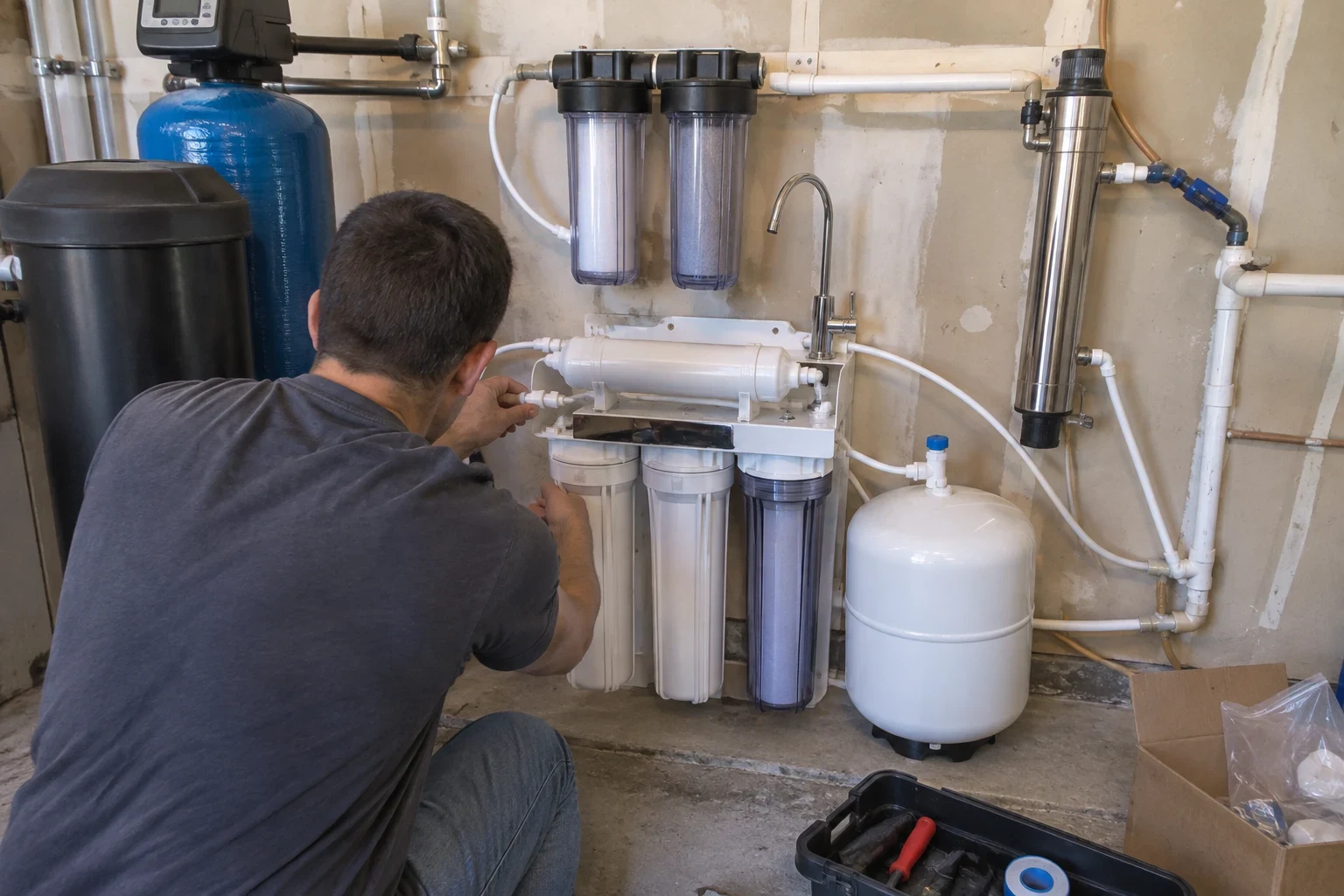
What a Reverse Osmosis System Does for You
Reverse osmosis forces your tap water across an extremely fine membrane, and that membrane stops most dissolved salts and minerals, along with a long list of other contaminants. The filtered water fills a compact tank under the sink and runs to its own faucet. That gives you cleaner water for drinking, ice, coffee and cooking without treating every faucet in your home.
It's a good match when what bothers you is the water in your glass. When the trouble is crusty fixtures, a water heater full of scale or spotty showers, water softener installation or whole-home filtration is the better answer. Many homes pair a softener for the whole house with reverse osmosis at the kitchen sink, and they complement each other nicely.
We don't suggest a system until we've checked the cabinet space, the cold shutoff, the drain, your water pressure and any softener you already have. We tell you what we found in everyday language, and the choice stays with you.
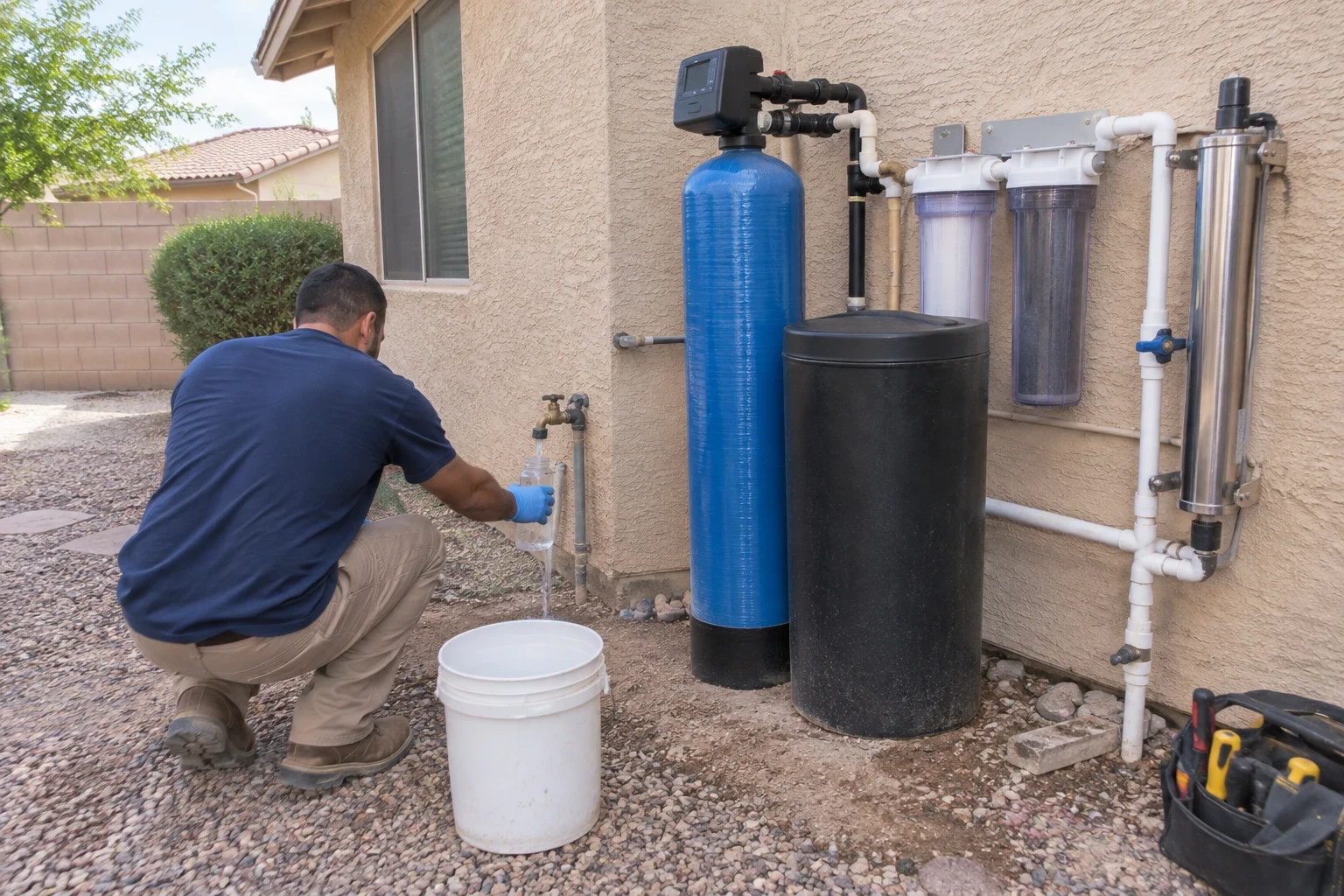
What's Included in Your RO Installation
- 01
A multi-stage filter system
Water first passes a sediment prefilter that traps grit, then carbon stages that take out chlorine taste and odor. The membrane does most of the cleaning, and a last carbon filter finishes the water right before the faucet. We walk you through each stage so buying replacement filters later is easy.
- 02
A dedicated drinking faucet
If your sink already has an open sprayer or soap dispenser hole, we put the faucet there. Otherwise we cut a new hole with a bit matched to your laminate, granite or quartz.
- 03
Tank placement that leaves you room
The storage tank goes where it stays out of the way of your trash can, cleaning supplies and disposal. In a cramped cabinet, we can discuss setting it in the one beside it.
- 04
A proper drain connection
We tie the wastewater line into your sink drain above the trap, the way plumbing code calls for, so drain water can't back up into the system.
- 05
Refrigerator and ice maker line, if you want it
If the fridge sits close enough, we can run tubing to it so your ice and cold water come from the same filtered water.
Questions about Reverse Osmosis System?
Call(520) 654-4269Signs Reverse Osmosis Makes Sense for Your Home
You buy bottled water by the case
If the tap only gets used for rinsing dishes, an RO faucet usually pays you back in fewer store runs and less plastic in the recycling bin.
Your water tastes like minerals or chlorine
Arizona water tends to carry a lot of dissolved minerals, and many people notice it in plain glasses of water and in coffee. A membrane system removes most of what you taste.
White flakes in the kettle or coffee maker
Scale building up in small appliances is a hint about what's in every glass you drink, too.
Softened water tastes a little salty
A softener swaps hardness minerals for sodium. Reverse osmosis at the kitchen removes most of it, so your drinking water tastes clean while the rest of the house stays soft.
An old RO unit that drips or runs slow
A faucet that barely trickles or a tank that never seems full often means a tired membrane, a failed valve or a waterlogged tank. We'll tell you honestly whether it's worth repairing parts or replacing the system.
How Your RO Install Goes
- 1
Start with a quick call
Let us know what you don't like about your water and what's sitting under your sink today. Then we pick a time to come see it.
- 2
We inspect before we suggest
We look over the cold water valve, the drain, the cabinet space, your water pressure and any filter or softener already installed. Weak pressure, for instance, may mean a small booster pump is a smart addition. We share what we found in plain words along with a clear recommendation.
- 3
Installation day
We turn off the cold supply, mount the filter unit, set the faucet and tank, and hook up the drain line. A towel and cabinet liner go down first to keep the floor of your cabinet protected. A typical kitchen install takes a few hours.
- 4
Flush, check and walkthrough
We flush the first tank to rinse the new filters, then look over each fitting for drips. Before heading out, we point out the shutoff, explain filter changes and tidy up the work area.
What Shapes the Price of an RO System
Two things drive most of the cost: the system you pick and how easy your kitchen is to work in. We talk through both once we've looked at your sink, so the figure you get by phone or at the visit matches your real setup. If a worn valve or awkward drain needs attention, you hear about it before any work begins.
- Number of stages and features
- A basic four- or five-stage system is the lower-cost option. Adding a remineralizing stage, choosing a tankless model or building in a pump raises the price.
- Your countertop and faucet hole
- An open sprayer or soap hole keeps things simple. Cutting through granite or quartz takes slower, more careful work.
- Additional tubing runs
- A line to the refrigerator, or a tank set in the next cabinet over, means more tubing and more time.
- Shape of the existing plumbing
- A corroded shutoff that won't turn or a drain that has to be reworked adds parts. We point out exactly what we saw so the extra cost makes sense.
- Water pressure at your sink
- When supply pressure is weak, the membrane filters slowly and the tank may never fill all the way. If our gauge reading comes in low, a small booster pump could be part of the recommendation.
Reverse Osmosis Questions We Hear Often
Does a reverse osmosis system waste a lot of water?
Every RO system sends some water to the drain to keep the membrane rinsed, and the amount varies quite a bit by model. Newer designs use far less than the older units many people remember. For any system we recommend, we'll give you its drain ratio so you can compare fairly.
Do I still need a water softener if I get RO?
They do different jobs. RO cleans up the water at one kitchen faucet, while a softener protects the pipes, fixtures and appliances throughout your home. Softened water also makes life easier for an RO membrane, so in a hard-water home the two work well together.
Does RO take out minerals I need?
It removes most dissolved minerals, but most of the minerals your body relies on come from food rather than water. If you prefer water with a bit of mineral taste, a remineralizing stage adds some back.
How often do the filters need changing?
Plan on replacing the prefilters and final carbon filter roughly once a year, or a little sooner with harder water. A membrane typically lasts a few years before it's due. We'll show you what to watch for so you know when it's time.
Is there room for RO if my sink already has a disposal?
Usually there is. We measure your cabinet during the visit before recommending anything. When space is tight, a compact system or a tank tucked into the neighboring cabinet tends to solve it.
Let's Take a Look Under Your Sink
Let us know what bugs you about the water you drink now. We'll come see your sink setup, walk you through what we notice and give you an honest recommendation.