ServicesAutomated Salt Delivery
Automated Salt Delivery in Maricopa
No more hauling 40-pound bags from the store or finding out the tank ran dry when the spots come back. We look over your softener first, set a delivery schedule that matches its real salt use, and load the brine tank for you on every visit.
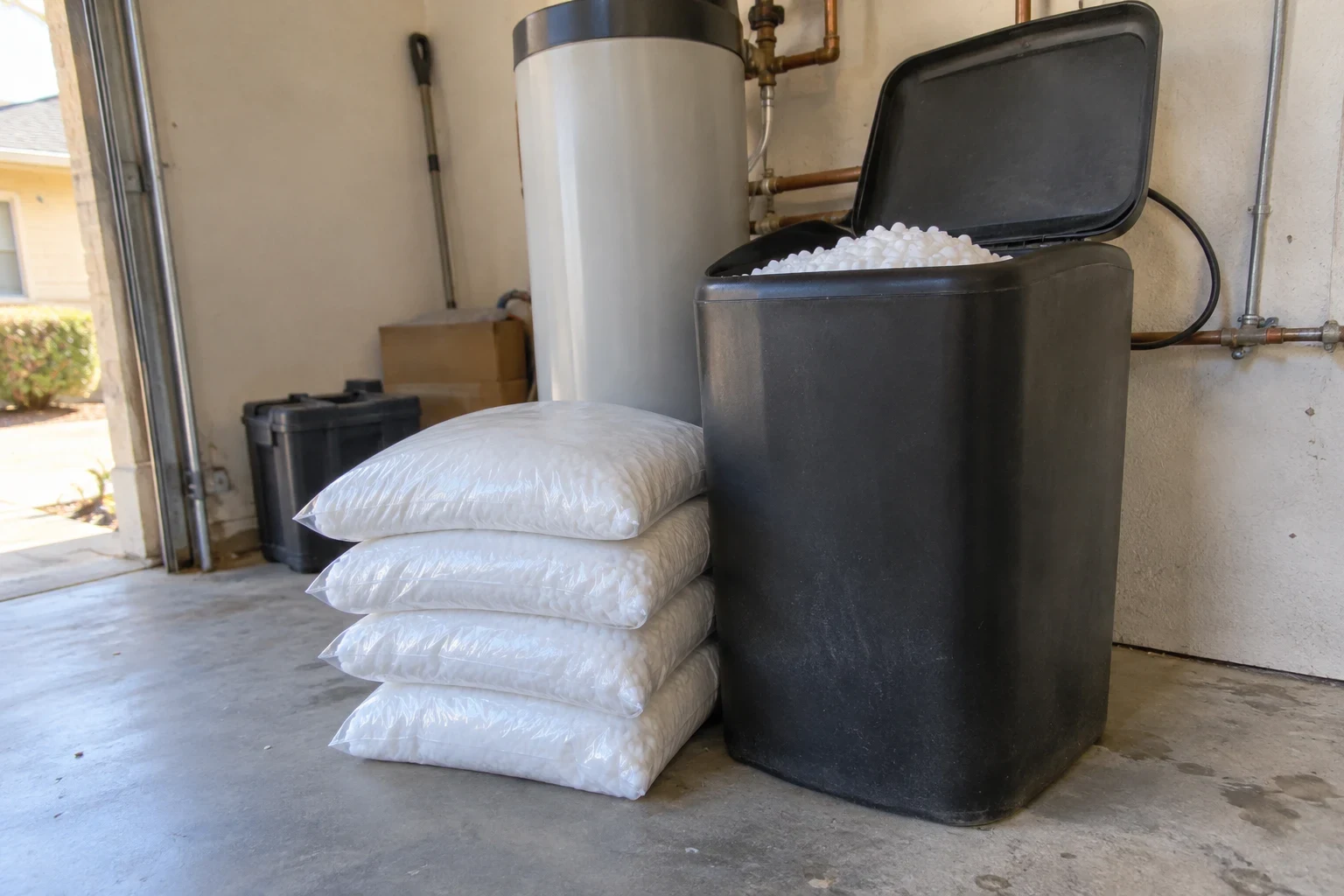
Salt in the tank, without the trip to the store
A water softener only works while there is salt in the brine tank. Once it runs low, hard water slips through and you start seeing white crust on faucets, cloudy glasses and scale in the water heater again. Most people don't notice until it has been empty for a while.
Automated salt delivery takes that chore off your list. We bring the salt, carry it to the softener, top off the tank and check that the salt is dissolving the way it should. Your schedule is built from what we see on the first visit, not a one-size plan.
It pairs naturally with a softener we put in through our water softener installation service, but we also service existing systems in your home, as long as they are in working shape.
What each delivery covers
Salt carried in and loaded
We bring the bags to the brine tank, wherever it sits in your home, and pour them in. You don't lift anything.
Salt bridge check
A hard crust can form across the tank and leave an empty pocket underneath, so the softener thinks it has salt when it doesn't. We probe for it each visit and break it up if we find one.
A look for mushy buildup
Fine salt can settle into a thick sludge at the bottom that blocks brine draw. If it's building up, we tell you and explain what a cleanout would involve before doing anything.
Quick settings glance
We note the regeneration setting and the salt level so the schedule stays accurate. If something looks off, you hear about it in plain words.
Your choice of salt
Pellets, solar crystals or potassium chloride. We'll tell you what tends to suit your softener and leave the decision to you.
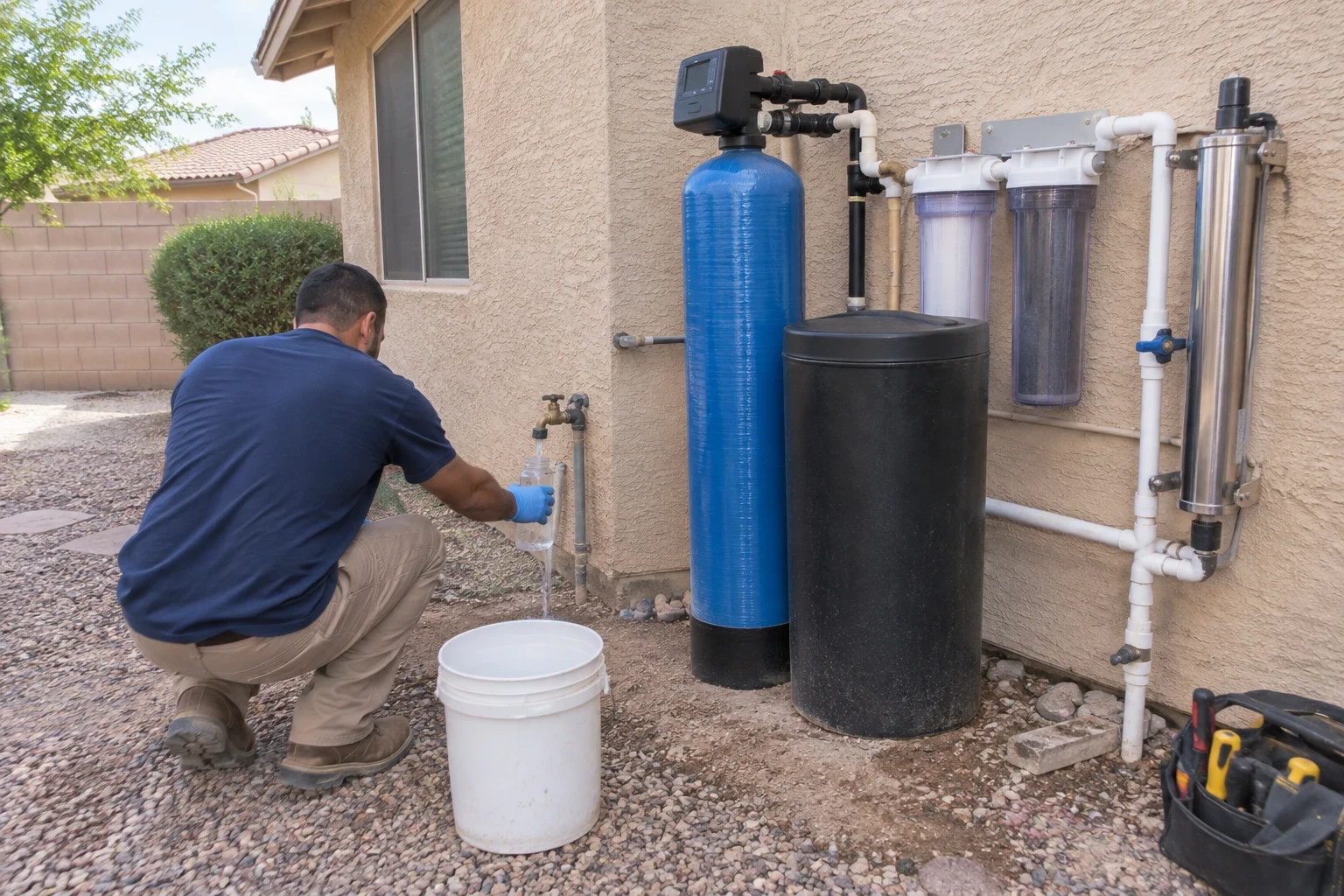
Signs a salt schedule would help
- Spots are coming back
- Water spots on dishes or crust on the showerhead after months of clear water often mean the tank ran low.
- You forget to check
- If the last time you looked in the brine tank is a mystery, a set schedule removes the guesswork.
- Heavy bags are a problem
- Salt bags are awkward and heavy. If lifting them is hard on your back or just a chore you dread in a hot garage, we can take it over.
- The salt level never drops
- A tank that looks full for months can be hiding a salt bridge. The softener isn't getting brine, and your water isn't being softened.
- Your household changed
- More people, a new bathroom or guests staying longer all raise water use, and your softener goes through salt faster.
How we get you started
- 1
A phone conversation
You tell us about your softener, its age and how many people live in your home. We explain how delivery works and set a time for the first visit.
- 2
First visit inspection
We open the brine tank, check for bridges or sludge, look at the control valve settings and note the tank size. You get a plain account of what we found before we suggest anything.
- 3
Building your schedule
From that inspection and your household size, we set how often we come and how much salt we bring. The goal is a tank that never runs empty and never gets overfilled.
- 4
Regular deliveries
On each visit we load the salt, check for bridging and let you know if anything has changed. If your use shifts, we adjust the timing with you.
What shapes the cost of salt delivery
Your cost depends mostly on how much salt your softener uses and what kind you choose. We go over the factors with you on the phone and after the first visit, so you know what each delivery includes before it arrives.
- Type of salt
- Potassium chloride costs more than sodium-based salt. Pellets and solar crystals also differ, and each behaves a little differently in the tank.
- How fast your softener uses it
- Household size, water use and the softener's regeneration settings all change how many bags you go through. Hard water, which is common across the area, means more regenerations.
- Delivery frequency
- More frequent visits with smaller loads cost differently than fewer, larger ones. We'll suggest a rhythm that fits your tank size.
- Tank condition
- If the first visit turns up heavy sludge or a stubborn bridge, a cleanout may make sense. We explain it and you decide.
Salt delivery questions
- Do I need to be home for each delivery?
- That depends on where your softener sits. If it's in a garage or utility area we can reach, we can work out access with you during the first visit. If it's inside, we'll set visits for times that work for your schedule.
- Can you deliver salt for a softener you didn't install?
- Yes, in most cases. We look it over on the first visit to make sure it's working well enough that adding salt actually helps. If it isn't, we'll tell you what we found and what your options are.
- Which salt should I use?
- Most softeners run fine on pellets or solar crystals. Some people prefer potassium chloride to cut sodium, though it costs more and the softener may need a settings change. We'll walk you through the tradeoff for your system.
- Can I change or pause my schedule?
- Yes. If you travel for the summer or have family moving in, give us a ring and we'll shift the timing so the tank stays at a sensible level.
- What happens if you spot a problem with my softener?
- We tell you plainly what we saw, such as a bridge that keeps returning, a valve setting that looks wrong or a tank full of sludge. Nothing gets fixed or replaced without your say-so.
Let us handle the salt from here
Tell us a little about your softener and your household, and we'll set up a first visit to look it over and plan your deliveries. We serve Maricopa and nearby towns like Casa Grande and San Tan Valley.