ServicesWater Softener Installation
Water Softener Installation in Maricopa
Hard water shows up as chalky rings around your fixtures, a cloudy haze on glassware and a hidden mineral layer in the water heater. We come out first, look at your plumbing and those signs, tell you plainly what we see, then install a softener matched to your space and water use.
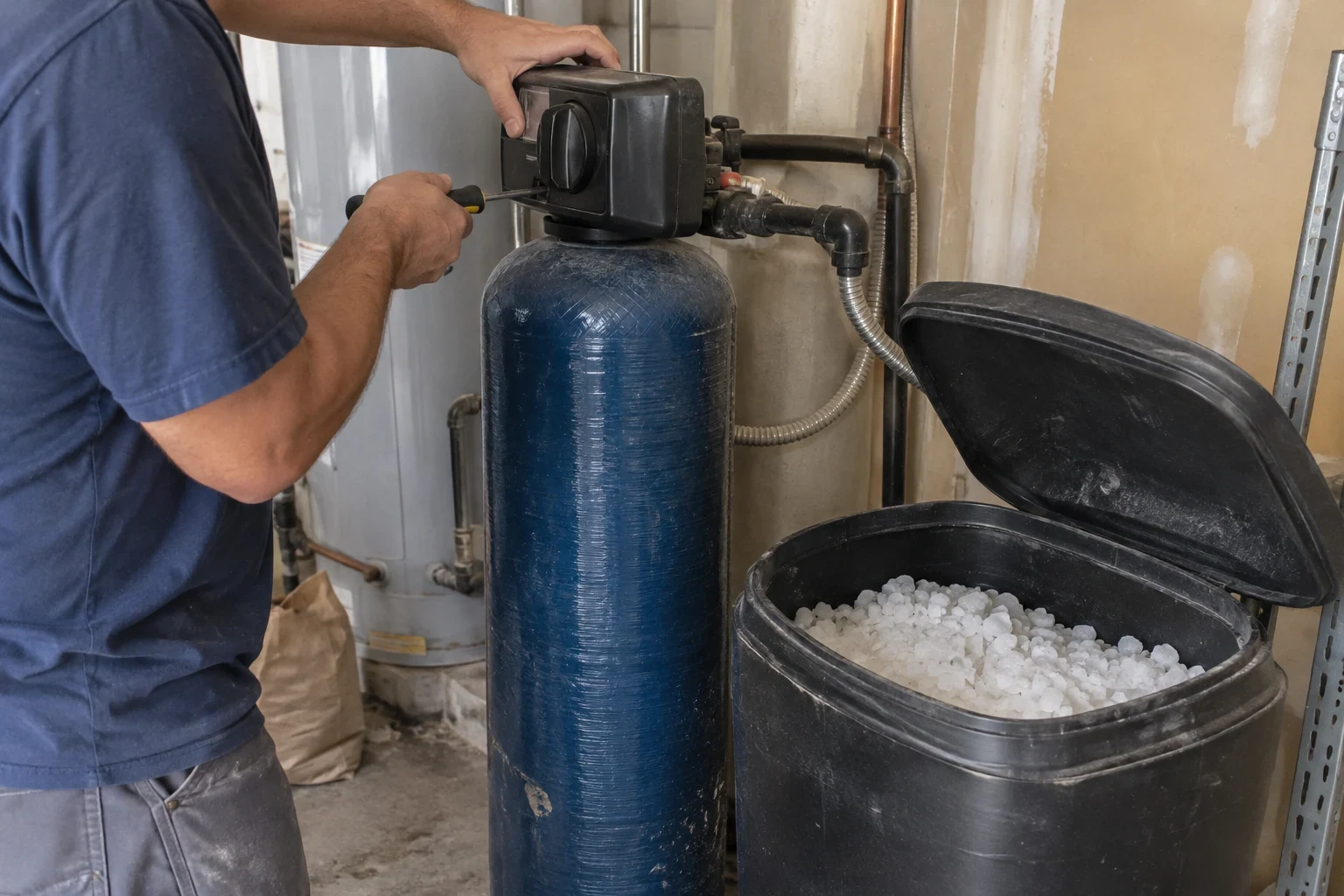
A softener that fits your home, not a catalog
A water softener sits on your main water line and swaps the calcium and magnesium in hard water for sodium or potassium before the water reaches your fixtures. The result is less scale in your pipes, water heater and appliances, and soap that actually lathers.
Before we recommend anything, we come out and look. We check where your main line enters, whether there is a softener loop already in place, how far the drain is and what condition any existing unit is in. Then we tell you what we found and what we would do, with the reasons. If your current softener just needs a new setting rather than a replacement, we say so.
Many newer homes around Maricopa are built with a softener loop in the garage, which keeps the install simple. Older homes or custom layouts may need a little more plumbing, and you will know that before the work is scheduled.
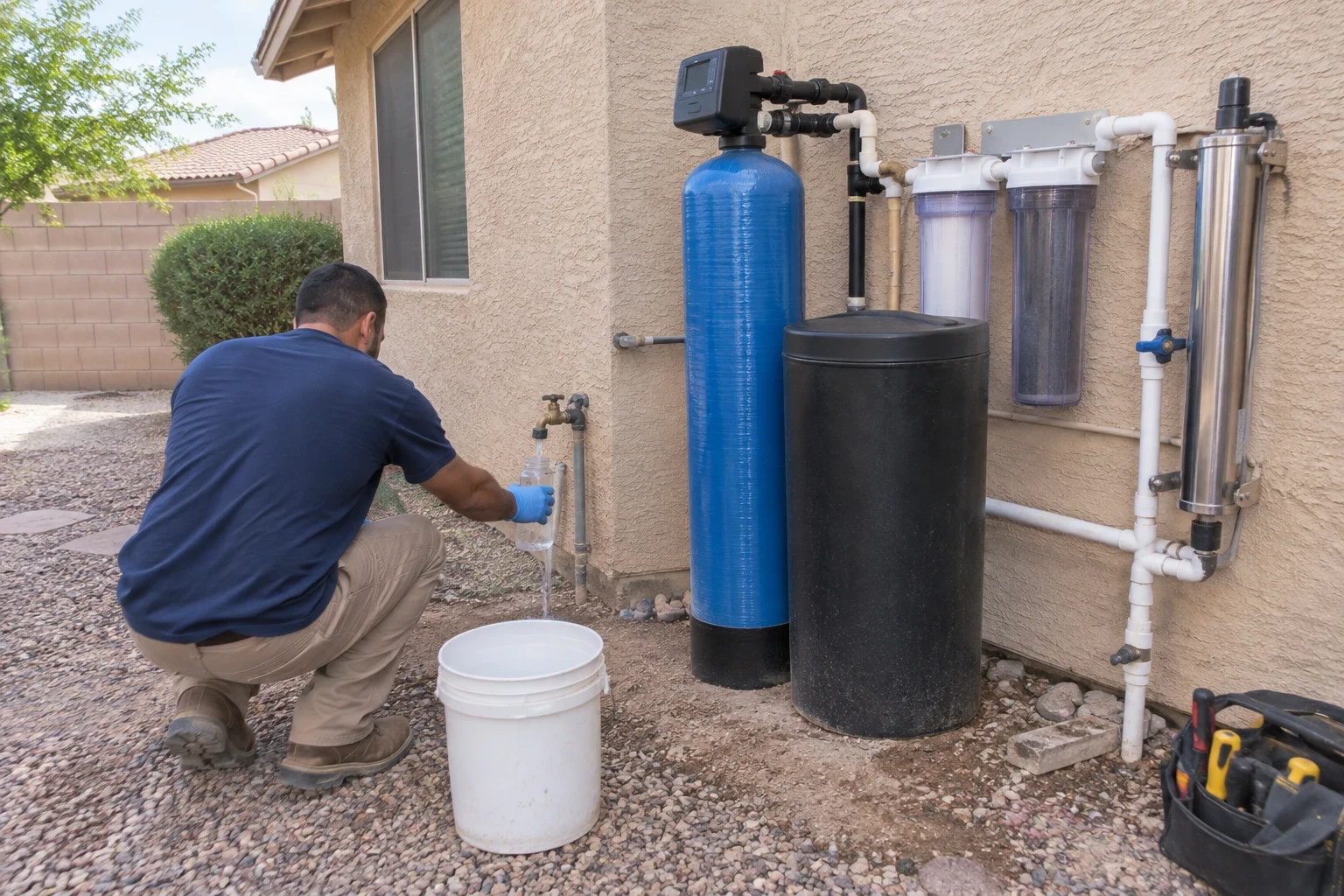
What your installation includes
- 01
A look before the quote
We check your plumbing loop, drain access, electrical outlet and the space you have. You hear our findings in plain language before we recommend anything.
- 02
Capacity matched to real use
We base the unit's size on the number of people in your home and the gallons you typically go through each day. An undersized softener regenerates constantly and eats through salt. An oversized one can sit unused so long that water starts cutting channels through the resin bed.
- 03
Bypass valve and proper drain
Every install gets a bypass valve so you can take the softener out of the line without turning off your water. The drain line gets an air gap so nothing can back up into the unit.
- 04
Programming and first fill
We set the regeneration schedule, add salt to the brine tank and run the first cycle. Then we check every connection for leaks before we pack up.
- 05
Removal of your old unit
If an old softener has reached the end of its life, we disconnect it and take it with us.
- 06
A walkthrough when we finish
We show you where the bypass is, how to check the salt level and what the control display means, so you are never guessing.
Questions about Water Softener Installation?
Call(520) 654-4269How to tell hard water is costing you
Chalky rings on fixtures
The pale crust around faucets and shower heads is mineral scale. It plugs aerators, narrows the spray and returns within days of a good scrub.
Cloudy glassware and hazy shower doors
Glasses that come out of the dishwasher dull and a film you cannot wipe off the shower glass are both typical marks of hard water.
Popping sounds from the water heater
Heated water drops its minerals, and they settle in a layer at the bottom of the tank. Water trapped beneath that layer flashes into steam bubbles, which makes the noise, and the heater uses more energy to warm the same amount of water.
Soap that barely suds
Hardness minerals work against soap and shampoo. Many people notice dry skin, stiff towels and reaching for extra detergent.
A softener that no longer keeps up
When the unit still uses salt but the spots and scale have come back, the valve, resin or settings may be worn. We take a look first and tell you whether an adjustment will do or a replacement makes more sense.
How a softener installation goes
- 1
Start with a phone call
Tell us what you are noticing around your home and whether you already have a softener. We set a time to come out and look.
- 2
Inspection and plain findings
We check your loop, drain, outlet and space, and look at the scale on your fixtures. You hear what we found and what we recommend, along with a written estimate that lists each part of the job.
- 3
Install day
We shut off the water, connect the softener with a bypass valve, run the drain line and plug in the control head. Your water is usually off for only part of the visit, and we protect the floor where we work.
- 4
Startup, leak check and cleanup
We fill the brine tank, program the regeneration cycle and run water through every connection to check for leaks. We clean up, haul away packaging and any old unit, and walk you through how it all works.
What affects the cost of installation
Every home's plumbing is laid out a little differently, which is why we see the space before we put a number on it. You get a written estimate broken into line items, so each part of the work is visible before you say yes. The factors below are the ones that shift the total most.
- Softener capacity and valve type
- A bigger household needs more capacity. A metered valve tracks the gallons you actually run and regenerates only when it needs to. It costs more at install than a valve on a fixed timer, but over the years it tends to use less salt and water.
- Whether a loop is already in place
- If your home already has a softener loop, the hookup is simple. If we have to cut into the main line and build one, that means more parts and more labor.
- Drain and power access
- The softener needs somewhere to send regeneration water and an outlet to run the control head. A long drain run or no nearby outlet adds to the job.
- Removing old equipment
- Taking out and hauling off an existing softener adds time, more so when worn fittings have to be replaced along the way.
Water softener installation questions
How long does a softener installation take?
When a softener loop is already in place, most installs take part of a day. Adding a new loop or a long drain run takes longer. We will tell you what to expect after the inspection so you can plan around it.
Will you try to sell me a bigger system than I need?
No. We size the softener to your household and water use, and we explain why we chose that size. If your existing softener only needs adjusting, we will tell you that instead of quoting a new one.
Should I use salt or potassium?
Both work. Salt costs less and is what most people use. Potassium chloride is an option if you would rather keep sodium out of your water, though it usually costs more per bag. If you would like help keeping the tank filled, ask about our automated salt delivery.
Is softened water okay to drink?
Softening adds a small amount of sodium to your water. Plenty of families are comfortable with that. Others add a reverse osmosis system under the kitchen counter so the glass of water and the pasta pot get an extra level of filtering. We are happy to talk through which option suits your home.
Does a softener take out chlorine taste?
No. A softener handles hardness minerals, not chlorine or taste and odor. If those bother you, whole-home filtration installed ahead of the softener is the better fit, and it also helps protect the softener's resin.
Ready to stop scrubbing scale?
Give us a call and tell us what you are seeing. We will come look at your plumbing, explain what we find and give you a clear written estimate before anything gets installed.